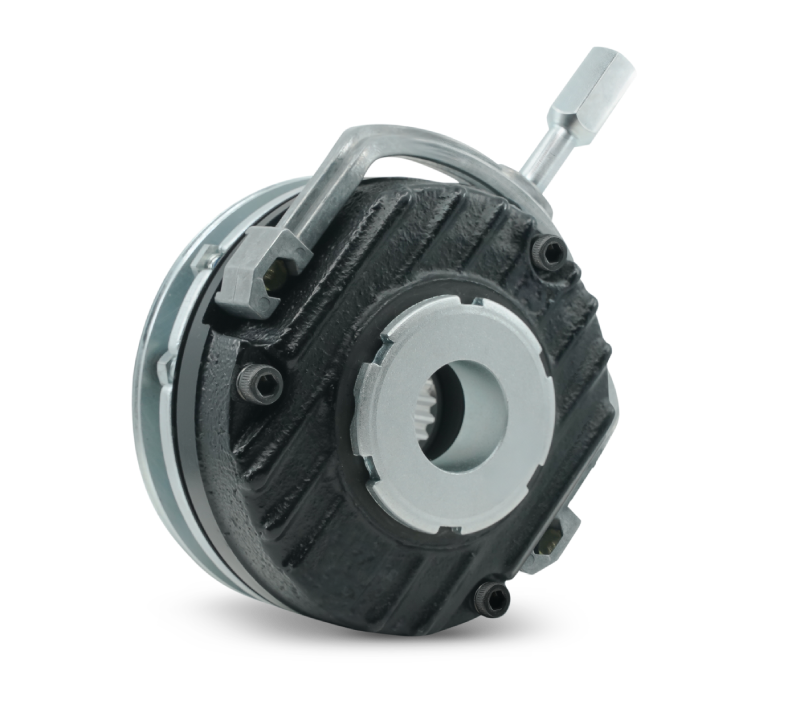
Spring Applied (Power-Off) Brakes
Spring-applied brakes, also referred to as power-off brakes, are critical safety components used in applications across aerospace, robotics, energy, and more. These electromagnetic brakes engage when power is removed. This design makes them the trusted choice for situations in which equipment must stop or hold securely in the event of a power loss.
On this page, you’ll find an overview of how spring-applied brakes work, key factors to consider when selecting a model for your application, and the different brake types offered by SEPAC.
What to Consider When Choosing Spring Applied Brakes
The appropriate type of spring-applied brake depends on the details of the application. Choosing the right option can help ensure longer brake life, improved safety, and reliable operation.
Here are some factors that engineers and designers should evaluate:

Functional and torque requirements.
Determine whether the brake will be used for static holding or dynamic stopping. Always size the brake so it exceeds the maximum torque requirement.

Operating speed and duty cycle.
In dynamic applications, heat dissipation is crucial for maintaining optimal performance. Factor in maximum speed and braking frequency to avoid overheating and premature wear.

Environmental conditions.
Temperature extremes, vacuum/radiation environments, humidity, dust, shock and/or vibration conditions, and oil can all affect performance. Select a brake that can withstand the applicable conditions.

Power supply.
Because an electromagnetic coil controls the release mechanism, ensure the voltage and current align with your system’s electrical design.
An Overview of Spring-Applied Brake Engagement
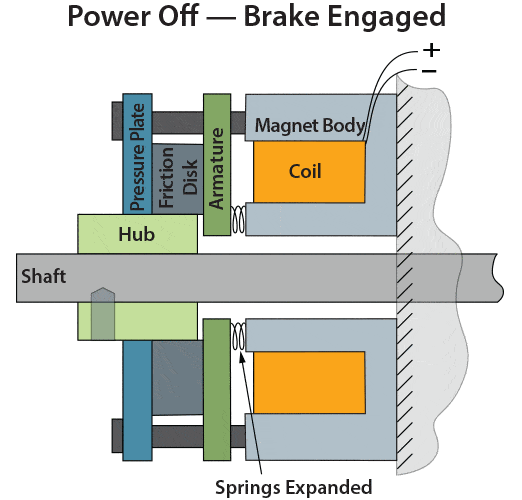
Spring-applied brakes are defined by their unique fail-safe mechanism. These brakes are the standard solution for applications in which safety is paramount, so it’s important to understand the distinction between power-on and power-off engagement.
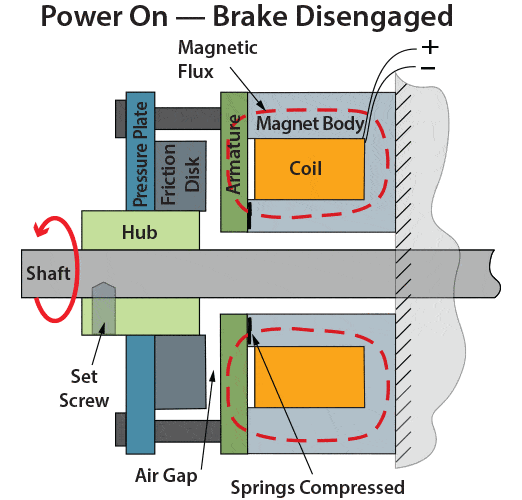
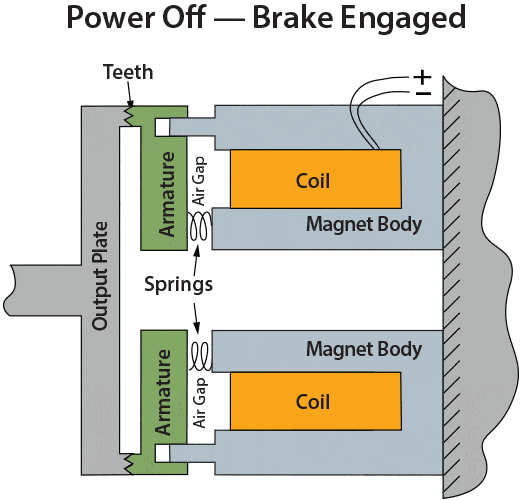
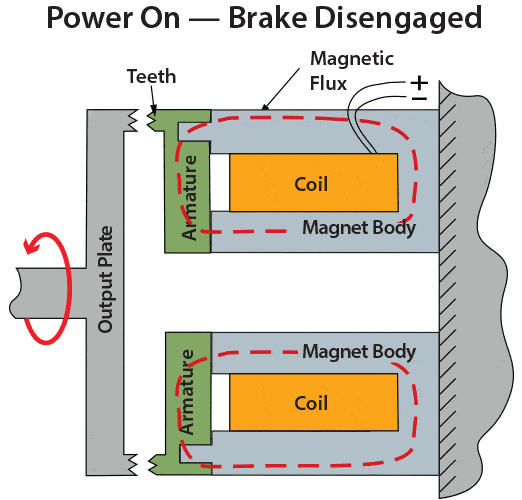
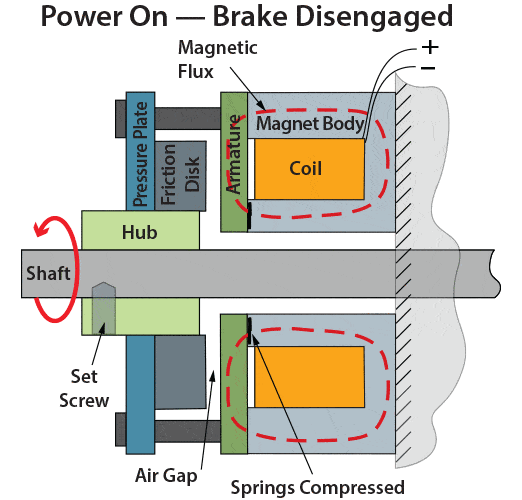
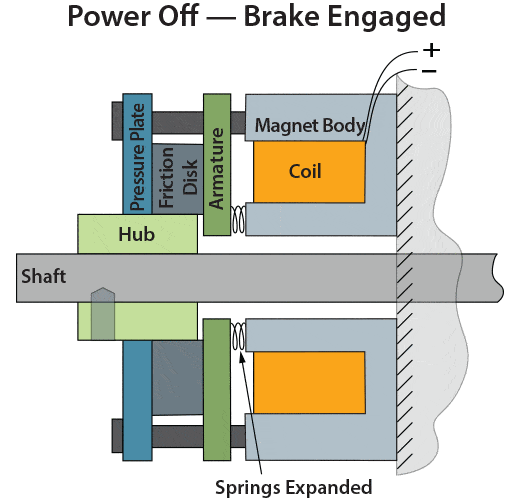
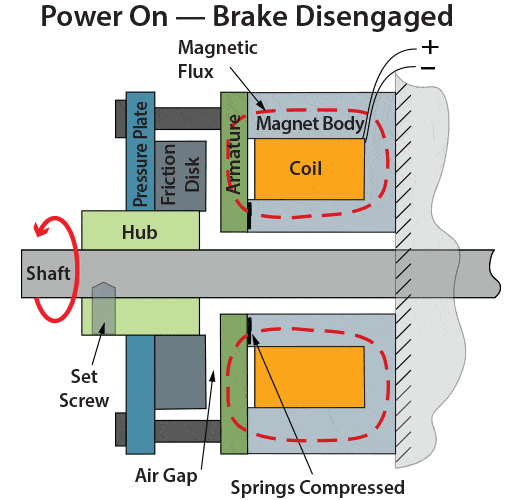
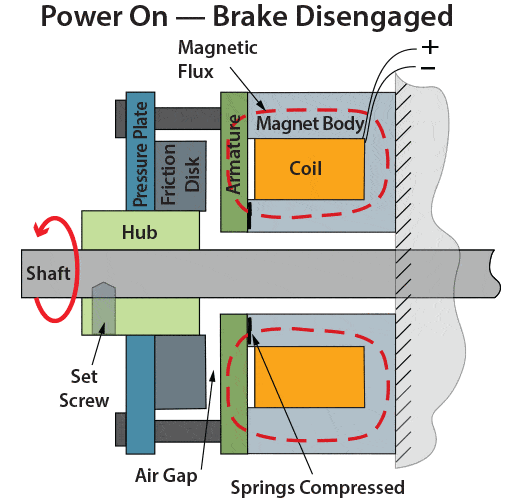
- How they work. When power is removed, the springs engage automatically, stopping or holding the load in place. Internal compression springs provide the braking force.
- Power-on vs. power-off. In power-on brakes, applying power energizes the electromagnetic coil, pulling the armature away from the friction surface and releasing the brake. In power-off brakes, cutting power disengages the coil and causes the springs to engage.
- Safety first. Power-off engagement ensures equipment comes to a safe stop during a power outage or emergency shutdown.
Types of Spring-Applied Brakes
SEPAC designs both tooth brakes and friction brakes, giving engineers options for static holding or dynamic stopping applications. Let’s take a look at these two types of spring-applied brakes.
Tooth Brakes
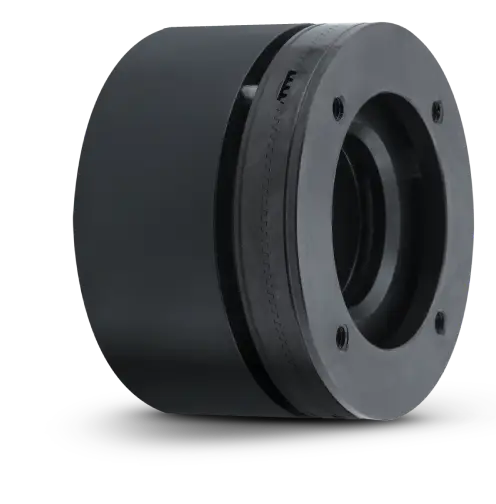
Tooth brakes provide positive, no-slip engagement with interlocking teeth. This design offers:
- Extremely high static holding torque in a compact footprint.
- Secure load holding for vertical axes, hoists, or other applications where movement must be completely prevented.
- Compatibility with both dry and oil-filled environments.
SEPAC’s SETB Series is the ultimate in static holding power for spring-applied tooth brakes. Learn more about SEPAC Tooth Brakes.
Friction Brakes
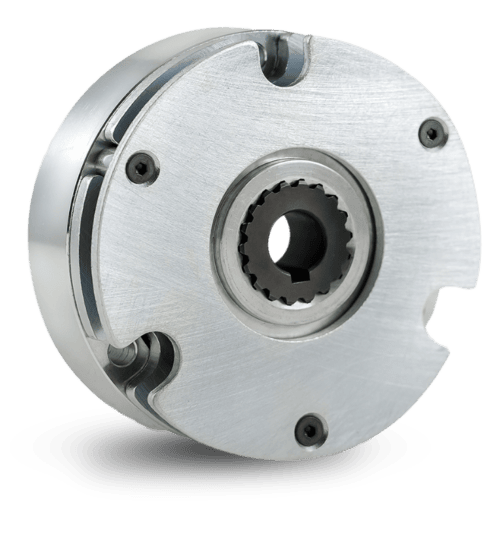
Friction brakes use friction discs to transmit torque. This provides a smoother and more controlled deceleration for equipment. They are:
- Suitable for both static holding and dynamic stopping applications.
- Versatile enough to meet the needs of a wide range of applications.
- Available in dry or oil-filled models, depending on application requirements.
SEPAC offers several friction brake series, including:
Explore SEPAC Friction Brakes.
Performance & Troubleshooting
Once you’ve selected the best spring-applied brake for your application, getting the most from it requires regular maintenance and troubleshooting as necessary. Some things to be aware of when assessing the condition and performance of your brake include:

Incorrect sizing.
An undersized brake may fail to deliver the torque required for safe operation.

Misalignment.
Incorrect installation can create excess stress and lead to premature wear.

Duty cycle issues.
Frequent dynamic stops generate heat, and without proper dissipation, performance can degrade.

Manual release.
Some SEPAC brakes include a manual release lever, allowing maintenance crews to safely disengage the brake without power.
Learn more about SEPAC Electromagnetic brakes.
Choose SEPAC for Spring Applied Brakes
When safety and reliability cannot be compromised, SEPAC delivers. With four decades of experience supplying spring-applied brakes for aerospace, robotics, energy, and other critical sectors, our team provides the expertise and product range to meet your needs.
Whether you require the high holding torque of a tooth brake or the versatility of a friction brake, SEPAC has the right solution. Contact us to learn more.
Designed specifically for Aerospace & Defense Applications. Standard spring-applied friction brake suitable for dynamic stopping and holding.
- Torque rating up 30g combined shock and vibration
- 1 to 4” diameter; 0.788 to 2.397” length
- Holding voltage @8 VDC up to 60g max. combined shock
- Operates from -67°F – 158°F & up to 10,000 FT altitude
- Class “H” Insulation
- Nitrocarburized plates & ENP magnet body
- SS hardware & locking thread inserts
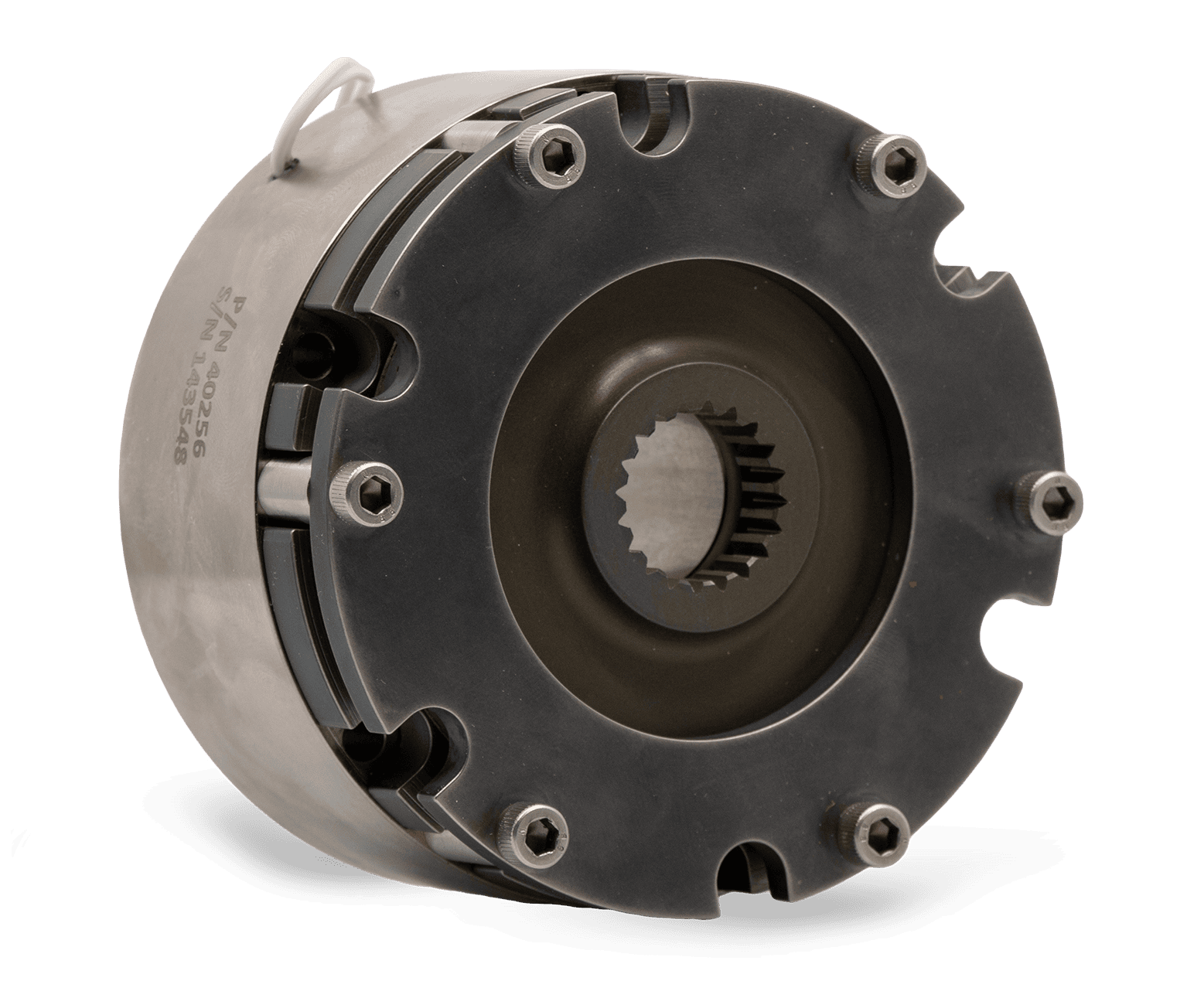
This stationary field spring applied tooth brake is designed to operate both dry and in oil. It can be piloted either on the outside diameter or magnet body bore. Many options are available.
- 2.8 to 9.6” diameter; 1.4 to 6.5” length
- Bore sizes from 1.2 to 5.1”
- Static torque from 20 to 2600 lb-ft
- 1800 to 5500 RPM max speed
- Operates both dry and in oil
- Modified designs and customized assemblies available
This spring applied brake is electromagnetically released and can be used either dry or in oil depending on the type of friction material used.
- 1.375 to 20.0” diameter; 2.10 to 8.38” length
- Bore sizes from 0.625 to 5.5”
- Static torque from 0.08 to 4330 lb-ft
- Starting torque from 0.04 to 2150 lb-ft
- 24/90/110VDC coil voltage
- Operates both dry and in oil
- Modified designs and customized assemblies available
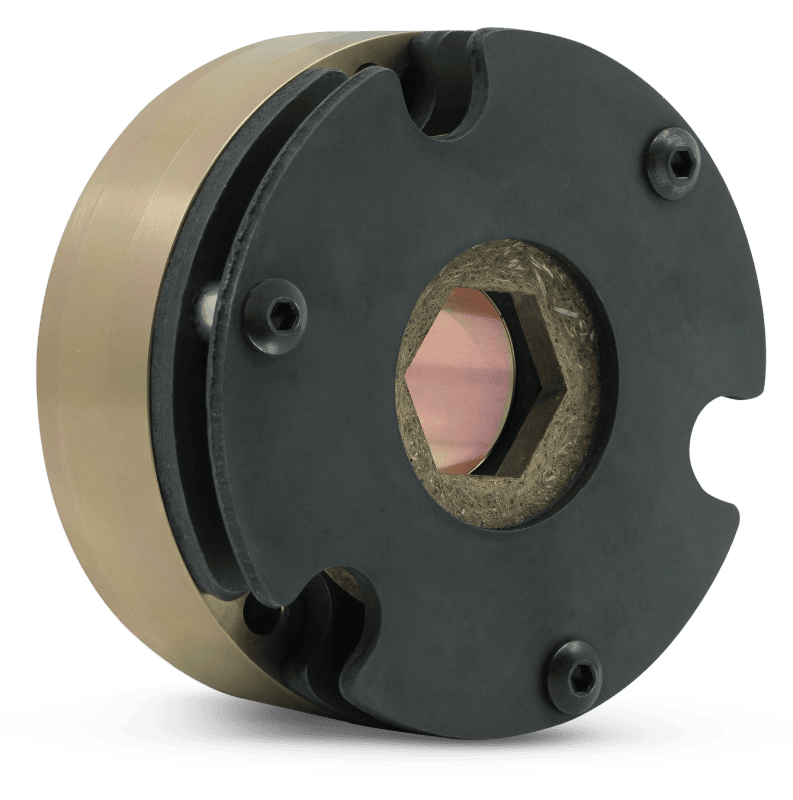
Low-cost power-off brake that is electromagnetically released. The relatively thin profile of these brakes compared to normal spring applied brakes make them a perfect candidate for a variety of applications while providing a good torque to size ratio.
- 2.8 to 9.6” diameter; 1.4 to 6.5” length
- Bore sizes from 1.2 to 5.1”
- Static torque from 20 to 2600 lb-ft
- 1800 to 5500 RPM max speed
- Operates both dry and in oil
- Modified designs and customized assemblies available
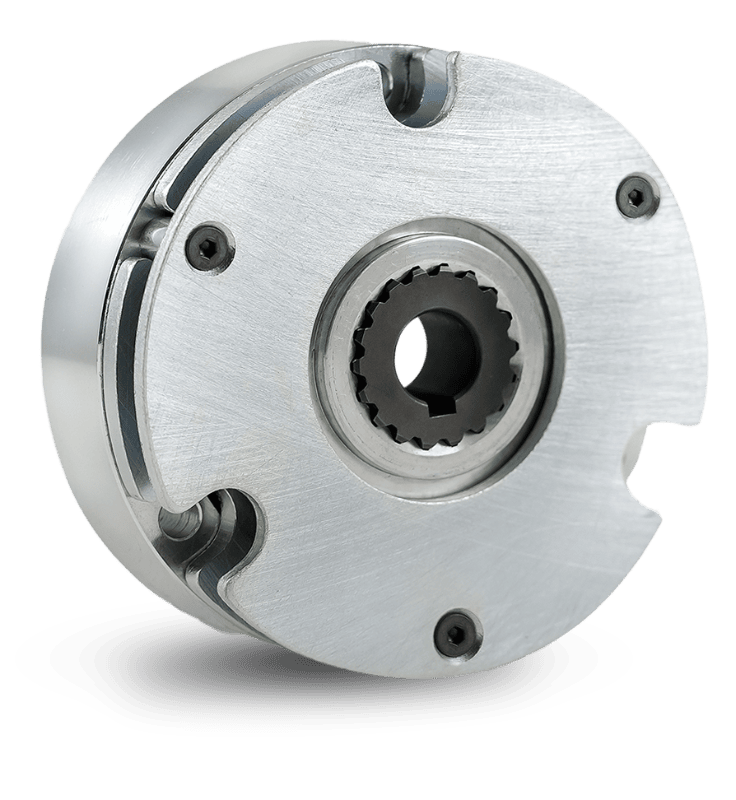
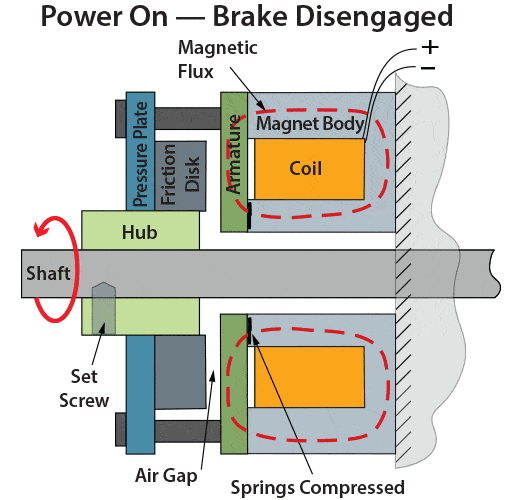
Thinnest profile power-off brake available — provides a very short package size when the brake is mounted to the rear of a motor; and when mounted to the front, there is still room for mounting a pulley. Equipped with PWM controller to reduce heat and save energy for continuous duty applications.
- 1.02 to 2.80” diameter ; 0.47 to 0.75” length
- Bore sizes from 0.19 to 0.79”
- Static torque from 0.53 to 28.32 lb-in
- 24VDC coil voltage for 0.5 sec max; 7VDC holding voltage with PWM controller
- Modified designs and customized assemblies available
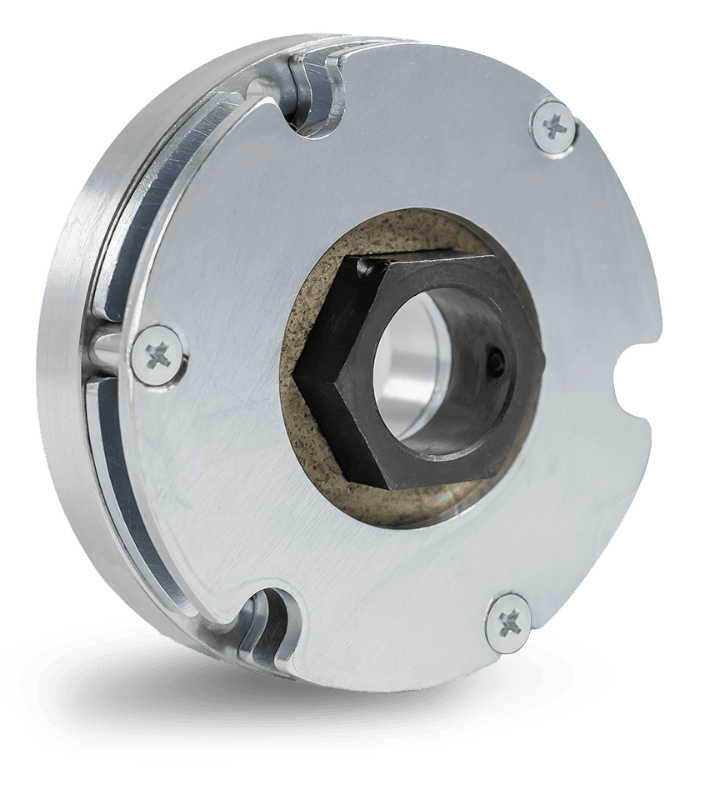
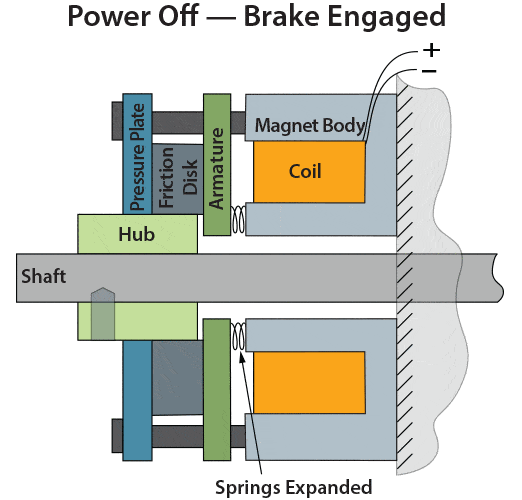
This low-cost manual release power-off brake is designed to operate dry and easily mounts to a motor or frame. The brake includes a manual release lever which provides an override in the absence of power as well and a dust cover to help keep the friction surface free of debris. A torque adjustment collar also allows the torque to be manually adjusted based on the application.
- 3.3 to 11.9” diameter; 1.6 to 4.7” length
- Bore sizes from 0.43 to 1.7”
- Static torque from 2.95 to 354 lb-ft
- Power ratings of 20W to 110W
- 24VDC coil voltage
- Modified designs and customized assemblies available